

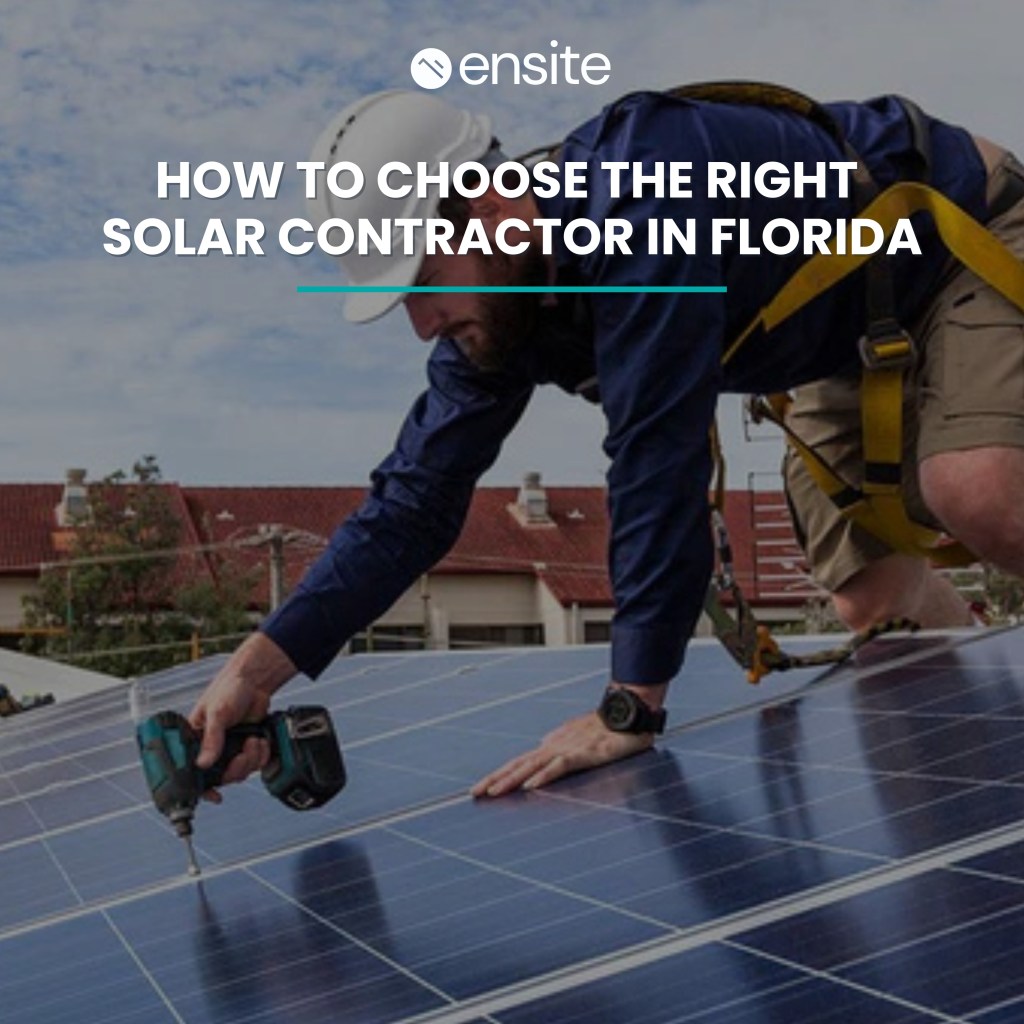
How to Choose the Right Solar Contractor in Florida (2026 Homeowner & Commercial Guide)?
Choosing a solar contractor in Florida in 2026 requires careful evaluation. Strict Florida solar permit requirements, hurricane wind-load standards, and utility interconnection rules mean contractor errors can delay approvals or increase long-term risk.
Whether you need a residential solar contractor Florida for a home or a commercial solar contractor Florida for a larger property, the right partner affects compliance, structural safety, and system performance. With many solar companies in Florida competing for projects, price alone is not a reliable indicator of quality.
If you know how to choose a solar contractor in Florida, it helps property owners protect their investment and ensure a smooth solar panel installation in Florida from survey to final inspection.
Why Choosing the Right Solar Contractor in Florida Is Different in 2026?
The operating environment for any solar contractor in Florida is more complex in 2026 than it was even a few years ago. Regulatory enforcement has tightened, wind-load engineering standards remain stringent, and municipalities continue to refine Florida solar permit requirements at the local level.
Unlike lower-wind states, Florida projects must account for high-velocity hurricane zones, roof uplift pressures, and detailed structural documentation. These factors directly influence attachment design, engineering approvals, and inspection outcomes.
At the same time, utilities and insurers are applying greater scrutiny to both residential and commercial solar projects. For property owners, this means the margin for contractor error is small. In Florida, compliance, documentation accuracy, and field precision are central to a successful installation.
Licensing, Certifications & Florida Solar Permit Requirements
Selecting a solar contractor in Florida begins with verifying credentials and regulatory competence. In Florida’s compliance-driven environment, these factors directly impact permitting and inspection outcomes.
1. State Licensing Requirements
A licensed solar contractor Florida must hold the appropriate electrical or specialty contractor license recognized by the state. Proper licensing allows the contractor to:
Pull permits legally
Schedule inspections
Perform grid-tied electrical work
Meet state building code standards
2. Industry Certifications
Many property owners prefer a certified solar installer Florida with recognized industry credentials such as NABCEP certification. Certification indicates technical proficiency in:
System sizing and electrical integration
Structural and mounting design
Code-compliant installation practices
3. Understanding Florida Solar Permit Requirements
Florida solar permit requirements vary by county and municipality. A qualified Florida solar installation company understands:
Local submission documentation standards
Structural engineering requirements
Inspection sequencing and utility approvals
Residential vs Commercial Solar Contractors: What Property Owners Must Know
Selecting the right solar contractor in Florida requires understanding how project scale changes technical responsibility. Residential and commercial installations operate under different structural, electrical, and regulatory demands. Choosing the wrong category of contractor can create avoidable delays and compliance risks.
Structural & Engineering Scope
A residential solar contractor Florida typically works with pitched roofs, asphalt shingles, or tile systems. Structural review focuses on rafter spacing, roof condition, and wind uplift resistance in hurricane-prone zones. Engineering documentation is important but generally limited to residential load calculations and attachment plans.
A commercial solar contractor Florida, however, must address flat or low-slope roofing systems, steel or concrete decking, parapet wind exposure, and larger array footprints. Structural validation is more extensive and may involve third-party engineering review. Wind-load documentation is often more rigorous due to higher surface exposure.
Electrical & Utility Coordination
Residential systems usually interconnect under standard net metering guidelines. Load calculations and service panel integration are comparatively straightforward.
Commercial systems may require three-phase electrical coordination, transformer upgrades, and detailed single-line diagrams. In larger projects, a solar EPC contractor Florida may manage engineering, procurement, and construction under one integrated structure to ensure electrical and regulatory alignment.
Permitting & Regulatory Oversight
Florida solar permit requirements vary by municipality, but commercial projects typically face deeper scrutiny. Fire setback compliance, structural letters, and pre-install utility approvals are more common in commercial builds.
A qualified Florida solar project contractor understands how these pathways differ and prepares documentation accordingly.
Risk & Insurance Considerations
For homeowners, risk centers on roof integrity and system performance. For commercial property owners, exposure expands to tenant operations, insurance underwriting reviews, and business continuity. Contractor experience at the correct scale directly influences how these risks are managed.
Florida Solar Contractor Evaluation Checklist (Step-by-Step)
Choosing a solar contractor in Florida should follow a structured evaluation process. Price comparisons alone do not reveal whether a contractor can execute a compliant, inspection-ready project in Florida’s regulatory environment.
Step 1: Verify Licensing & Legal Standing
Before reviewing proposals, confirm the contractor is a licensed solar contractor Florida authorized to perform electrical and rooftop solar work. Licensing determines whether the company can legally pull permits and coordinate inspections under Florida solar permit requirements. A reputable Florida solar installation company should provide license details transparently and document active registration.
Step 2: Confirm Experience With Your Property Type
Ask whether the company functions primarily as a residential solar contractor Florida or a commercial solar contractor Florida. Experience at the appropriate scale matters. Commercial property owners, in particular, should determine whether the firm operates as a solar EPC contractor Florida capable of coordinating engineering, procurement, and construction under one framework.
Step 3: Evaluate the Solar Site Survey Process
A professional solar site survey Florida is foundational to system accuracy. Confirm whether measurements are taken onsite, how structural conditions are documented, and who reviews field data before engineering begins. Weak survey practices often lead to permit corrections and inspection delays.
Step 4: Review Permit & Documentation Management
Ask how the contractor handles Florida solar permit requirements from submission to final approval. A qualified Florida solar project contractor should clearly outline timelines, inspection sequencing, and responsibility for revisions if required.
Step 5: Ask Direct, Technical Questions
Preparing specific questions to ask a solar contractor Florida can quickly reveal competency. Inquire about structural wind-load calculations, roof attachment methods, interconnection coordination, and inspection history. Clear, technically grounded answers indicate operational depth rather than sales-driven positioning.
Red Flags to Avoid When Comparing Solar Companies in Florida
Not all solar companies in Florida operate with the same level of technical discipline. While many proposals may look similar on paper, certain warning signs indicate elevated project risk.
Vague Licensing or Permit Responsibility
If a contractor cannot clearly explain who pulls permits or how they navigate Florida solar permit requirements, that is a concern. A legitimate solar contractor in Florida should define responsibility for submissions, inspections, and any required corrections before installation begins.
Sales-Driven Process Without Technical Depth
Some solar companies in Florida focus heavily on closing contracts while outsourcing engineering and field validation. If a Florida solar installation company cannot explain its structural review process or site validation standards, the likelihood of permit revisions increases.
No Clear Solar Site Survey Process
A professional solar site survey Florida should include documented roof measurements, structural observations, and electrical panel review. Contractors relying solely on remote satellite modeling without field validation may encounter dimensional discrepancies that delay installation.
Unrealistic Timelines or Production Claims
If a solar installer in Florida guarantees unusually fast approvals or exaggerated energy output without explaining assumptions, proceed cautiously. Permitting timelines vary by municipality, and performance estimates should be grounded in site-specific data.
Limited Experience at Your Project Scale
A residential solar contractor Florida may not be equipped to handle the engineering and utility coordination required for larger facilities. Likewise, a commercial solar contractor Florida may not prioritize smaller residential projects with the same attention to detail. Project scale alignment matters.
When evaluating a solar contractor in Florida, identifying these red flags early can prevent delays, inspection failures, and long-term performance issues.
Make a Confident Solar Investment in 2026
Choosing the right solar contractor in Florida determines whether your project moves efficiently from permit approval to final inspection. In a state with strict Florida solar permit requirements and high wind-load standards, execution discipline matters.
Whether hiring a residential solar contractor Florida or a commercial solar contractor Florida, property owners should prioritize licensing, documented solar site survey Florida processes, and proven compliance experience. The goal is not simply installation, but a system that passes inspection, performs reliably, and protects the underlying property.
Smartly choosing a solar contractor in Florida ensures your solar panel installation is technically sound, fully compliant, and built for long-term performance.